
AI Recognition of Waste in T-REX Composters
Updated: Mar 11
Powered by TFS IQ
In a busy commercial kitchen, waste moves fast. A line cook clears a prep station. A student empties a plate between classes. A barista drops a stack of used cups at the end of a shift. In those moments, decisions are quick and attention is elsewhere. What lands in the compost stream is not always sorted with precision, yet composting performance depends entirely on those deposits.
In corporate dining facilities, universities, hospitality venues, stadiums, and food production sites, waste streams are dynamic. They shift with menu rotations, seasonal ingredients, supplier packaging changes, and human habits. On Monday the stream may be heavy with produce trimmings. On Friday it may contain more protein scraps and beverage containers. Without visibility at the moment of disposal, contamination and imbalance quietly accumulate inside the system.
Terraforma Systems built the solution directly into the composter itself, powered by TFS IQ, which includes an integrated AI recognition system that sees what enters the unit in real time. Instead of discovering problems after a compost cycle is complete, facilities gain awareness at the point of deposit. Composting becomes informed, measurable, and controlled from the start.
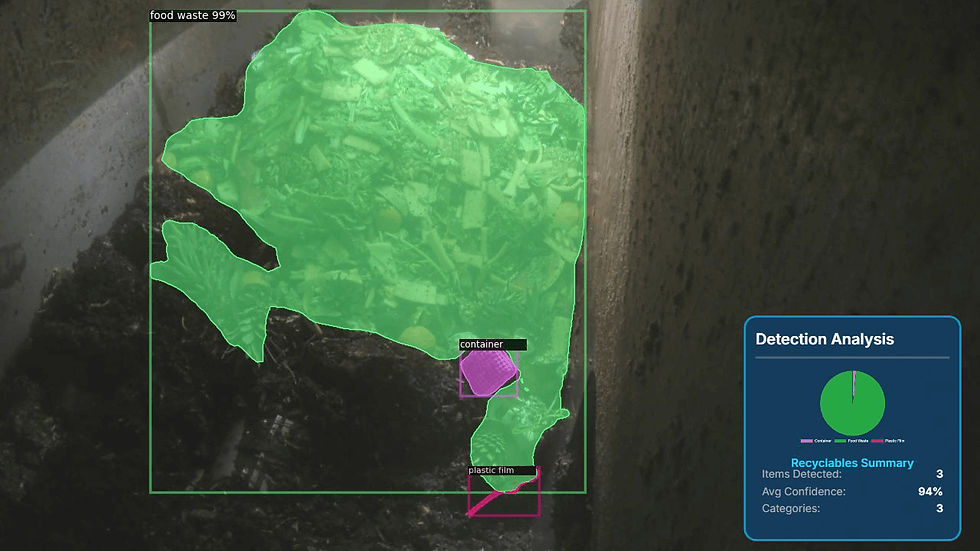
Seeing Waste as It Enters the Composter Through AI Recognition
Inside every T-REX composter unit, a protected internal camera captures material as it is deposited. Before the waste is mixed, and transformed, it is observed. Images are processed through TFS IQ AI Recognition system, where materials are segmented, classified, and logged into structured categories aligned with compost operations.
The placement of the camera is intentional. Once materials are blended together, visual distinctions disappear. By choosing to analyze deposits immediately after the bin is loaded into the machine and saving it, the team preserves a clear record of original composition. Over time, the data collected creates a detailed picture of how a facility actually behaves, not how it assumes it behaves.
The AI Segmentation process is triggered as needed and runs as prompted. Staff continue their routines uninterrupted, while each deposit can add to a growing dataset that reflects real material flow.
Compostable Packaging in the Real World
Sustainable packaging has evolved quickly. Fiber bowls, molded pulp trays, bagasse containers, compostable cutlery, and certified bioplastic lids are increasingly common. At the same time, conventional plastics often mimic the appearance of compostable alternatives. Clear PET containers resemble PLA. Coated paperboard looks identical to fiber-based packaging.
The AI Segmentor system is continually being trained to distinguish between these materials based on shape, texture, reflectivity, thickness, and structural features. This distinction matters operationally. Fiber packaging integrates into compost predictably, while some bioplastics require sustained thermophilic conditions. Conventional plastics do not belong in the system at all.
By identifying and logging these items, TFS IQ can reveal whether a facility’s packaging strategy aligns with its composting capability. It also is being trained to highlight when non-compostable look-alikes are entering the stream. Over time, procurement decisions can be evaluated against actual disposal data rather than sustainability assumptions.
Coffee Cups and Beverage Waste
Coffee cups illustrate how easily contamination can scale. In high-traffic environments, hundreds or thousands of cups may be discarded daily. Many appear to be paper, yet contain polyethylene liners. Others use compostable linings that require specific processing conditions. Lids may be polypropylene, polystyrene, or certified compostable resin.
Within the T-REX composter system, coffee cup are classified separately. This level of detail reveals how the beverage packaging contributes to contamination trends. If plastic lids consistently enter the compost stream, signage and bin design may need adjustment. This ensures evaluations become a data-driven discussion.
Rather than relying on periodic audits, facilities can see patterns that emerge through AI recognition.
Produce Waste
Plant-based waste remains the backbone of most compost streams. Lettuce trimmings, onion skins, fruit peels, herb stems, and prepared vegetable scraps supply moisture and nutrients that fuel microbial activity. These materials influence aeration, temperature curves, and stabilization rates inside the compost chamber.
The AI recognition system can classify plant-based inputs, helping operators understand the proportion of fresh produce relative to other materials. A stream dominated by high-moisture vegetables behaves differently from one heavy in dry starches or protein scraps. By observing these shifts through continuous AI training over time, operators can interpret compost performance with greater precision.
The system also brings clarity to the difference between pre-consumer waste from food preparation and post-consumer waste from plate returns. That distinction supports broader waste reduction initiatives upstream.
Protein and Nitrogen-Heavy Inputs
Animal-based materials introduce additional biological complexity. Meat scraps, poultry bones, fish remains, and dairy residues contain dense proteins and elevated nitrogen levels. In moderate amounts they contribute valuable nutrients. In excess, they can disrupt microbial balance and extend stabilization time.
TFS IQ's AI Segmentor is being trained to identify these materials as distinct inputs. When protein-heavy waste spikes, operators can correlate those changes with temperature profiles, or aeration demands. Menu cycles, catering events, and seasonal offerings become visible in the compost data itself.
This connection between input composition and process performance strengthens operational control.
Bread, Grains, and Starch-Dense Materials
Bread products, pastries, pasta, and rice are fully compostable, yet they influence decomposition differently than fibrous produce waste. Starch-dense materials can compact, retain moisture, and shift carbon-to-nitrogen ratios within the compost matrix.
The AI Segmentor system's continuous training helps in tracking of these inputs within the broader organic stream. Facilities with high volumes of bakery waste, such as campuses or conference centers, gain insight into how these materials contribute to variations in compost texture and cycle duration. Instead of attributing changes solely to mechanical factors, operators can interpret biological drivers more accurately.

Expanding the View of Contamination
Metal cans and rigid plastics are obvious contaminants, but real-world waste streams contain a wider range of problematic materials. The T-REX's TFS IQ AI recognition system continually trained to detect a broad spectrum of inorganic and non-compostable items. When a bin containing contaminants is tipped in, the system uses AI segmentation to identify the material types, automatically generates a contamination report, and sends out an alert to the operator, allowing operators to track sources, improve sorting practices, and maintain higher-quality compost streams.
These include aluminum beverage cans and steel food tins, plastic bottles and caps, multilayer snack wrappers, plastic films and shrink wrap, foam containers, disposable gloves, condiment packets, glass bottles, ceramic fragments, laminated paperboard, coated freezer boxes, silicone baking liners, and synthetic tea bags. Even small items such as twist ties, produce stickers, and plastic cutlery can compromise compost quality when they accumulate.
By identifying the larger items of these materials at the point of entry, TFS IQ transforms contamination into a measurable variable. Instead of discovering foreign objects during compost extraction, facilities gain immediate awareness of how and when contamination occurs.
From Observation to Action
Every waste deposit can be logged through TFS IQ. Over weeks and months, patterns become visible. A specific location or day of the week may show elevated contaminations. Certain shifts may generate higher volumes of beverage packaging. A new supplier’s containers may correlate with increased non-compostable input.
Because the data originates directly from the composter, it reflects actual behavior rather than estimated diversion rates. Sustainability managers can report with confidence. Procurement teams can evaluate packaging compatibility. Operations leaders can redesign waste stations based on evidence.
The system does not simply identify objects. It connects material behavior to operational decisions.
Learning From Real Environments
Waste streams evolve. Packaging manufacturers introduce new materials. Food service models change. The AI recognition model within TFS IQ is continually refined using real operational data drawn from active facilities. Lighting variation, mixed deposits, and disposal patterns all inform ongoing model development.
This continuous refinement ensures that the AI Segmentor accuracy remains aligned with real-world conditions rather than controlled demonstrations. The system improves as it observes more diverse material streams.
Composting With Accountability
Traditional composting systems focus on what happens inside the machine after materials are deposited. The TFS IQ platform expands that focus to include what enters the system in the first place. By providing the ability to identify compost materials and contaminants of the waste deposit , Terraforma Systems establishes a direct link between input behavior and compost output.
Waste is no longer anonymous. It is categorized, quantified, and understood in context. That visibility strengthens compost consistency, reduces contamination risk, and supports measurable sustainability performance.
Through AI recognition powered by TFS IQ, T-REX composters elevate composting from a disposal function to an intelligent, accountable component of modern resource management.


